When planning your lighting design, understanding what is the ideal spacing for recessed downlights is crucial. Proper spacing can dramatically influence the ambiance and functionality of a space. Many homeowners may overlook this detail, leading to uneven lighting or shadows in critical areas.
The ideal spacing often depends on the room's purpose and the type of fixtures used. For instance, a living room may require different spacing than a kitchen. Standard recommendations suggest placing fixtures between 4 to 6 feet apart, but this can vary based on ceiling height and light brightness.
Evaluating your specific needs is essential. Experimenting with spacing can lead to a more tailored lighting solution. A thoughtful approach to placement minimizes potential issues like hot spots or under-lit areas. Each area may require unique considerations. Balancing functionality with aesthetics often involves adjustments and reflections on your initial choices.
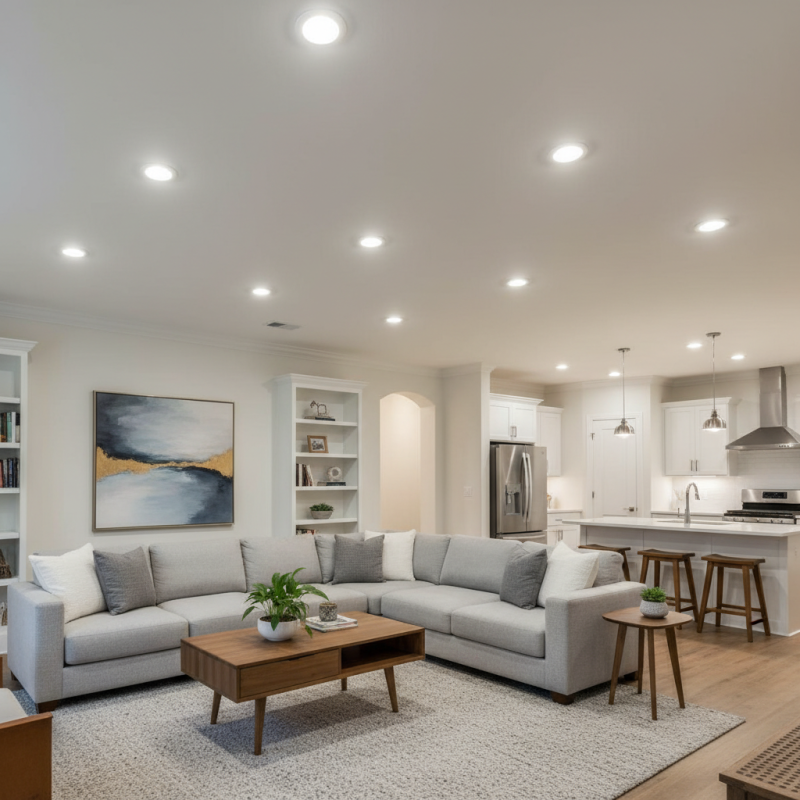
When determining the spacing for recessed downlights, several key factors come into play. The room's purpose significantly impacts how far apart your lights should be. For general lighting in living areas, experts recommend spacing them about 4 to 6 feet apart. However, for task lighting over kitchen islands or workspaces, a closer spacing of 2 to 3 feet may be more effective.
Ceiling height is another vital consideration. Standard residential ceilings are around 8 to 9 feet tall. In this case, the typical spacing guideline is about one foot for every foot of ceiling height. For example, in a 10-foot high ceiling, downlights should ideally be spaced 10 feet apart. According to the Illuminating Engineering Society (IES), improper spacing can lead to uneven lighting and shadows, which may detract from a room's functionality and aesthetic appeal.
Lastly, the beam angle of the downlights influences spacing as well. A narrow beam angle may require closer placement to ensure adequate light coverage. In contrast, wider beam angles may allow for more generous spacing. A report by the Lighting Research Center indicates that optimal downlight placement can reduce energy usage by nearly 30%. Understanding these factors will help create effective and efficient lighting solutions.
Determining the optimal distance between recessed downlights is crucial for effective lighting. This distance can dramatically affect the ambiance of a room. You should aim for a spacing that achieves balance without creating dark spots or overwhelming brightness.
A common guideline is to space the downlights roughly six to eight feet apart. However, this can vary based on ceiling height. For higher ceilings, you might need to increase the distance. Also, consider the wattage of the bulbs being used. Higher wattage bulbs provide more light but can cause glare if spaced too closely.
Tips: Evaluate the room size before installation. Measure the room dimensions carefully. Think about the purpose of the space; a cozy living room may require softer light than a kitchen. Experiment with different configurations during installation. Don’t be afraid to adjust your setup. The goal is to create a harmonious and functional lighting environment.
It’s also wise to reflect on the lighting layer. Ambient, task, and accent lights should complement your downlights. Mixing these elements can enhance the overall effect. Aim to create zones with different brightness levels. This can make the space feel more dynamic. Always test the setup before finalizing. Small adjustments can lead to significant improvements.
The height of your ceiling plays a crucial role in planning recessed downlights. When ceilings are low, downlights can create a cramped feel. On the other hand, high ceilings can cause shadows or insufficient light distribution. Consider your space carefully. Typical guidelines suggest placing lights 3 to 4 feet apart horizontally from one another. However, this varies with ceiling height.
For ceilings under 8 feet, aim for lights closer together, perhaps 2 to 3 feet apart. This helps maintain an even glow across the room. In contrast, for ceilings over 10 feet, you might increase the distance to 4 to 6 feet. This enhances light coverage without overwhelming the space.
It’s important to reflect on the functionality of each area. A kitchen may require more focused light than a living room. Also, the color of your walls can affect how light is perceived. Dark walls absorb light, while light colors reflect it. Experiment with different placements and arrangements. Adjust as needed to prevent harsh shadows or overly bright spots. Finding the ideal balance is key for both aesthetics and usefulness.
When it comes to recessed downlights, different rooms have unique lighting needs. In living rooms, a warm and inviting ambiance is essential. Positioning lights 6 to 8 feet apart can enhance comfort and visibility. Consider where people gather most. This spacing encourages interaction without harsh glare.
In kitchens, functionality takes priority. The ideal distance varies based on the ceiling height and layout. Generally, 4 to 6 feet between fixtures works well. Bright, focused lighting over counters is crucial. Too few lights can create shadows that hinder food preparation. Reflect on the workflow and adjust accordingly.
For bedrooms, softer, ambient light promotes relaxation. Spacing downlights 8 to 10 feet apart can create a cozy atmosphere. Pay attention to areas like bedside tables. Lights should illuminate without overwhelming brightness. It’s useful to experiment with different layouts to gauge what feels best. Lighting is personal, and each space requires thoughtful consideration.
When placing recessed downlights, balancing aesthetics and functionality is crucial. According to a report by the American Lighting Association, improper spacing can cause uneven lighting and create unwanted shadows. Ideal placement often calls for a spacing of 6 to 8 feet apart, depending on the ceiling height and the beam spread of the light fixtures. This spacing helps create a uniform glow, enhancing the overall ambiance of a room.
However, it's essential to consider room purpose. For example, a kitchen may require brighter, focused lighting, while a living room benefits from softer illumination. Designers suggest that downlights should be installed about two feet away from walls to avoid harsh shadows. Misjudging these distances can lead to a less inviting atmosphere. Overemphasizing aesthetics can also detract from functionality; too many fixtures might create glare, affecting comfort.
Incorporating dimmers aids in achieving the right balance. A well-designed lighting layout can dramatically influence how a space is perceived. Being mindful of these factors can lead to inviting designs, but neglecting them may result in an overly clinical or unwelcoming environment.
| Room Type | Ceiling Height (ft) | Recommended Spacing (ft) | Light Output (lm) | Fixture Size (inches) |
|---|---|---|---|---|
| Living Room | 8 | 6-8 | 700-1000 | 4 |
| Kitchen | 9 | 4-6 | 800-1200 | 6 |
| Bathroom | 8 | 3-5 | 500-800 | 4 |
| Bedroom | 10 | 6-9 | 600-900 | 5 |
| Hallway | 9 | 4-6 | 300-600 | 4 |
: Ceiling height impacts light placement. Low ceilings need closer lights, while high ceilings can use more distance.
For ceilings under 8 feet, place lights 2 to 3 feet apart for an even glow.
For ceilings over 10 feet, lights should be 4 to 6 feet apart to enhance coverage.
Different rooms need varied lighting. Kitchens require focused light, while living rooms benefit from a softer ambiance.
Dark walls absorb light, while light colors reflect it. This affects the overall brightness of the space.
In bedrooms, spacing lights 8 to 10 feet apart creates a cozy atmosphere, ideal for relaxation.
Downlights should be about two feet away from walls to avoid harsh shadows and improve comfort.
Dimmers allow for adjustable brightness. They help achieve a balance between aesthetics and functionality.
Poor lighting can create shadows, glare, or an uninviting atmosphere. Thoughtful planning is essential.
Experiment with different arrangements. Each space is unique, and personal preferences matter.
When considering what is the ideal spacing for recessed downlights, several key factors must be evaluated. First, the height of the ceiling plays a crucial role in determining how far apart the lights should be placed. A higher ceiling may require wider spacing to ensure adequate illumination, while lower ceilings can be closer together. Additionally, the specific lighting needs of different room types, such as living spaces versus work areas, will affect the arrangement and spacing of downlights.
Moreover, it is essential to balance aesthetics with functionality in downlight placement. Thoughtful positioning enhances the visual appeal of the space while providing the necessary light for activities. By taking into account these factors—spacing calculations, ceiling height, room types, and design considerations—one can effectively determine the most suitable arrangement for recessed downlights to achieve both beauty and practicality in lighting design.

PureRay Light